




Women Leadership Summit 2026 Concludes in Biratnagar, Calls for Stronger Policy Support for Women Entrepreneurs
May 4, 2026
The Women Leadership Summit 2026, focused on women’s entrepreneurship, financial inclusion, and policy participation, concluded successfully in Biratnagar with the release of the 16-point Declaration, calling for stronger policy interventions to promote women-led economic growth.
The summit was jointly organized by the Confederation of Nepalese Industries (CNI), CNI Koshi Province, and the CNI Women Leadership Forum under the chairmanship of Birendra Raj Pandey, with Hon’ble Chief Minister of Koshi Province Hikmat Kumar Karki attending as chief guest. The event saw notable participation from provincial ministers, local government representatives, senior government officials, private sector leaders, and entrepreneurs.
Held under the theme “Sustainable Prosperity through Agriculture, Skills, Creativity, and Digital Innovation,” the summit concluded with extensive discussions across multiple sessions, leading to the adoption of the Declaration. The declaration emphasized the need for clear government policies, programs, and incentives to ensure women’s meaningful participation in production, employment, investment, and leadership positions.
During the opening session,CNI President Birendra Raj Pandey stated that CNI strongly believes that women’s leadership is essential for Nepal’s sustainable and inclusive economic growth. He further emphasized the need to strengthen the economic status of rural women through agricultural modernization, improved market access, and expanded digital connectivity.
“Through this summit, we aim to strengthen collaboration, expand opportunities, and create policies that empower women to lead Nepal’s economic transformation. Together, let us build a more prosperous, innovative, and inclusive future’’. He mentioned.
Koshi Province Hon’ble Chief Minister Hikmat Kumar Karki stated that the provincial government is implementing special programs to attract women into entrepreneurship through expanded financial access, interest subsidies, and coordination with banks. He also announced plans to increase clothing allowances for provincial employees and require that one day’s official attire each week be produced within Koshi Province, a move expected to directly support local industries. He further assured that women lacking collateral would be prioritized for concessional loan access, adding that women have proven to be more responsible and effective participants in leadership and governance structures.
Industrialist Pawan Golyan acknowledged that women’s participation in leadership remains lower than expected and stressed the need for stronger institutional and policy support. He emphasized prioritizing skill development, financial access, and mentorship, while also advocating for stronger linkages between agriculture and industry to engage women in production and processing sectors.
CNI Koshi Province President Pawan Sarada encouraged women to become self-reliant, stating that confidence and creativity are key to sustainable success. He also pledged to increase women’s employment opportunities within his company.
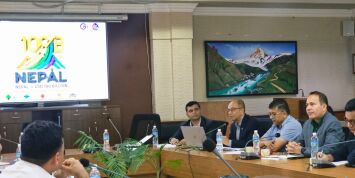
A panel discussion moderated by banking expert Anil Keshary Shah reinforced the declaration’s key agendas. Panelists Israel Mansuri, Kripa Basnet, and Mausami Shrestha shared insights on expanding women-led enterprises, strengthening agriculture-industry coordination, and improving policy frameworks.
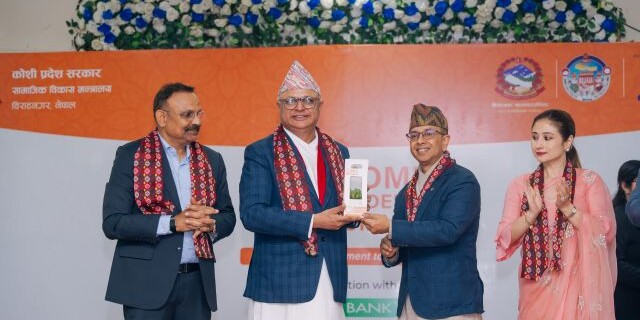
The declaration, approved during the conference, was formally handed over to the provincial government through chief guest Rajendra Kumar Poudel. He stated that economic development is not possible without active private sector participation and expressed confidence that the declaration would help guide future provincial policies and programs.
The declaration highlighted the importance of government-private sector collaboration in expanding financial access, skill development, entrepreneurship promotion, and market management. It also called for concessional loans without collateral, tax exemptions, interest subsidies, and a more business-friendly environment to transform women from labor participants into decision-makers and investors.
Closing the event, Chair of the Women Leadership Forum Hon’ble Vidushi Rana reaffirmed the forum’s commitment to coordinating and advocating with federal, provincial, and local governments to translate the summit’s agendas into action. She stressed that women’s empowerment must move beyond slogans and be reflected in concrete policy implementation.